
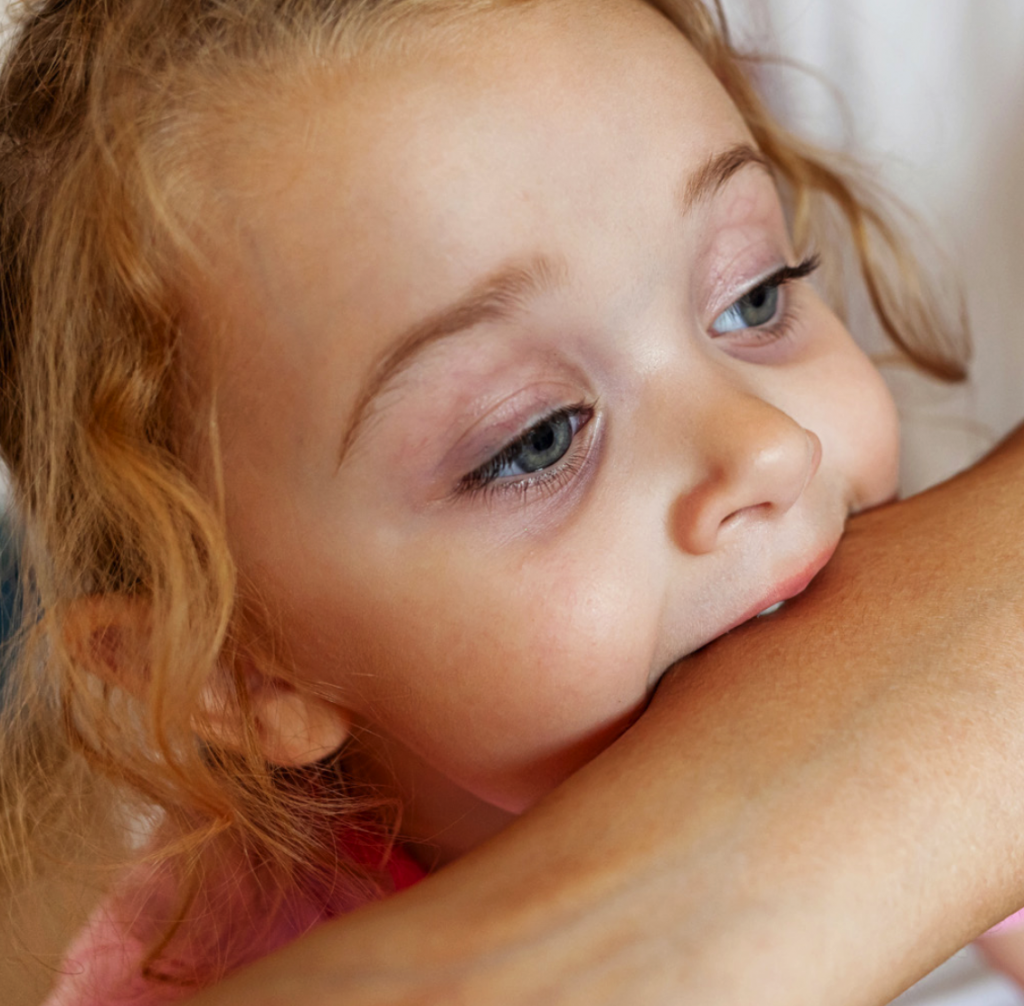
While many toddlers may begin biting at home or daycare, this can be very stressful for parents and others on the receiving end.
However, child development experts offer strategies for dealing with this often normal stage of development and advice on how to proceed if things get out of hand.
Common Causes of Biting
Biting is actually quite normal for developing toddlers. Christina Wood, a postdoctoral psychology fellow at Children’s National hospital and professor of child psychology, said that biting is often part of how toddlers learn about what’s around them.
“Babies are exploring the world through putting things in their mouths,” Wood said. “Sometimes that behavior might turn into biting in a toddler, and so it’s not uncommon at all for this to be occurring.”
Children often learn about the world by putting toys or household objects in their mouths, and sometimes friends and family are caught in the cross-fire, Wood said.
“Putting objects, including sometimes other people’s hands, into mouths, is pretty normal during that infancy and early toddlerhood time,” Wood said.
Biting can also be a way for children to communicate when they don’t have the language to express their emotions around new experiences, like toilet training or daycare.
“Being a toddler can be really frustrating, and so learning all these new things, biting may be a response to some of that,” Wood said.
Frequent biting, however, can be a sign of speech delays as children use it to express themselves rather than healthy communication. This may become a concern if children are not trying to vocalize their needs or if their attention cannot be directed away from biting, Wood said.
When to See a Doctor
If your child is biting frequently, consider bringing them to a pediatrician or child psychologist who can assess if the behavior is part of normal development or is caused by medical, communication or psychological issues.
“When biting starts to become really frequent or used as a way to communicate something, we want to make sure that children are getting the speech and communication support they need,” Wood said. “We would want children to be connected to support that can help them learn social skills.”
How Parents Can Help
Parents can help to handle biting at home. When a child bites, Woods suggests quickly removing their access to the body and using a brief, simple statement to deter them, such as, “No biting.”
Removing access may mean moving away from the child if necessary.
“The important thing is to make sure that you respond in the same way each time that it happens,” Wood said. “Toddlers learn a lot when the responses are predictable and consistent for them.”
When toddlers bite other children, rather than family members, Wood said it is often a way to communicate that they disagree with the other child. In that case, a two- to three-minute break can be offered in which they are not interacting with other children to help them understand that harming another person is not acceptable.
If a toddler is biting for sensory or teething reasons, there are several safe chewing toys designed for kids to direct them away from harmful behavior. Wood said these can be used in tandem with other strategies to promote safe and healthy habits.

Related Articles
A Pediatrician Q&A on Heat, Hydration and Sun Protection