
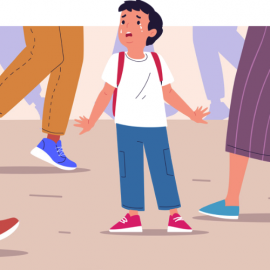
Summer often brings more freedom for kids — vacations, camps, sleepovers, neighborhood bike rides and family outings to busy parks or airports. It’s a season filled with adventure, but it can also bring more moments when children may interact with unfamiliar adults.
For many parents, teaching stranger safety can feel tricky. The goal is to protect children without making them fearful of everyone they do not know.
Experts say the conversation should focus less on “stranger danger” and more on awareness, boundaries and confidence.
Why “Stranger Danger” Can Be Too Simple
According to child safety experts, teaching kids that all strangers are bad can actually create confusion.
Most strangers are not dangerous, and in some situations — like getting lost in an airport or amusement park — a safe stranger may be exactly who a child needs to approach for help.
The National Center for Missing & Exploited Children encourages parents to teach children how to identify “safe adults,” such as police officers, store employees, camp counselors or parents with children nearby. This shifts the conversation from fear to practical decision-making.
Start With Clear, Age-Appropriate Rules
Children do best with simple, specific guidance.
Examples include:
- Never go anywhere with someone without checking with a parent or trusted adult first
- Never accept gifts, rides or treats without permission
- Stay with your group or buddy at camps, parks or public places
- If someone makes you uncomfortable, move away and tell a trusted adult immediately
For younger children, role-playing these scenarios can be especially effective.
According to the American Academy of Pediatrics, practicing safety skills ahead of time helps children feel more prepared in real situations.
Teach Body Autonomy and Listening to Instincts
Stranger safety is not only about unfamiliar people — it is also about helping children trust their feelings.
Kids should know that if someone, even a familiar adult, makes them feel scared, confused or uncomfortable, they can say no, leave and tell a trusted grown-up.
Teaching body autonomy — including that they do not owe hugs, physical affection or secrecy to anyone — can strengthen confidence and personal safety.
Summer-Specific Safety Tips
Because summer often means travel and changing routines, seasonal reminders matter.
Before trips, camps or crowded events, parents can:
- Review what to do if separated
- Identify safe adults or staff uniforms
- Make sure kids know parents’ names and phone numbers
- Use buddy systems when appropriate
- Create family meeting points in crowded spaces
The Federal Trade Commission also recommends helping children memorize key identifying information, especially during travel.
Keep the Tone Calm, Not Scary
Children are more likely to absorb safety lessons when parents stay calm and matter-of-fact. Overly frightening warnings can create anxiety without improving preparedness.
Instead of saying, “Be careful, strangers are dangerous,” try, “Most people are kind, but if anyone asks you to go somewhere or makes you uncomfortable, here’s what you do.” Confidence is often more empowering than fear.
The Bigger Goal
Ultimately, stranger safety is about building awareness, communication and trust. Summer should still feel exciting and adventurous. By giving kids practical tools rather than scary myths, parents can help them navigate new places and experiences with greater confidence.
Because the best safety conversations do not just teach children who to avoid — they teach them how to recognize problems, trust themselves and know exactly what to do next.