
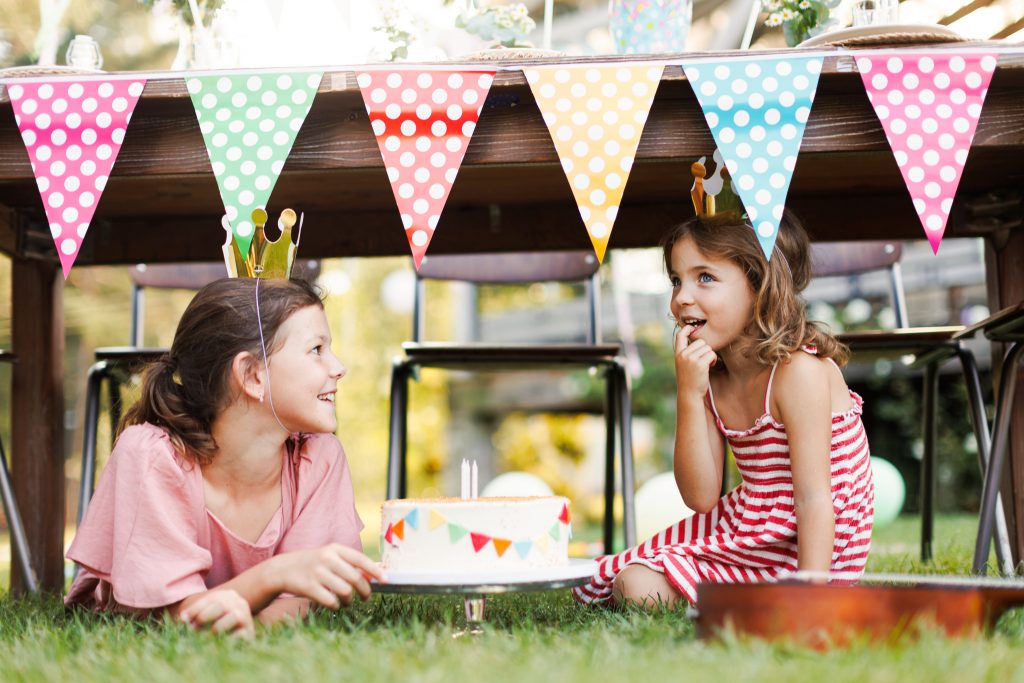
As a twin, I can say with confidence that birthdays are, and have always been, tricky in my household.
My brother insisted on a birthday party at the paintball arena, but I so desperately wanted to take a trip to the movies with friends to see “Ramona and Beezus.” This led to endless arguments on the drive home from school, my mother clearly overwhelmed with how to organize plans that celebrated each of us individually on our special day.
Making your children feel seen when they share a birthday month or date can be exceptionally stressful. Here are some tips to help navigate the challenges of shared birth dates or months to help the day end in fun, not disappointment, for everyone.

Combined Birthday Parties
For twins or children with birthdays close together, shared birthday celebrations can still allow both children to feel appreciated, and it makes it easy for all of their friends and family to be together in one place.
For example, utilize your pool, a community outdoor space, a park or your backyard with a bounce house and then plan activities related to each child’s specific interests. This can include a bracelet-making station for one child and a treasure hunt for the other, or a nail painting station and an obstacle course.
If there is a specific location that both of your children love, such as a jungle gym, water park or outdoor setting, consider assigning that as the birthday location. Shared party locations for children with an age gap include: a water park with both adult and kiddie sections, a trampoline park, an arcade and laser tag or the zoo, beach or a movie theatre.
Don’t be afraid to be creative with the joint birthday parties — consider splitting the dinner table in half, with one side decorated with Elsa decor and the other Spider-Man-themed. This strategy can be a great way to share the day but represent both kids’ passions.
Focus on Open-Communication and Schedule the Day in Advance
For parents who have twins, consider holding a discussion with them ahead of time and creating a specific schedule for the day that splits time equally between the two.
For example, my parents held a group breakfast and then took me to lunch with my cousins, and later to the zoo, and in the evening, they took my brother to dinner and a movie. While my brother was at dinner with my parents, I spent time with my cousins, who were my mother’s go-to babysitters.
If you can leave one child with a close friend while you are celebrating the other, this can ensure they have a fun-filled time throughout the entire day.

Separate the Birthdays Into Two Weekends
As your children get older, it might be harder to please their exact birthday party wishes, especially if there is a major age gap or stark contrast in interests.
Separating the birthday celebrations was a classic tactic my mother used as my brother and I entered high school and had vastly different friends and hobbies.
One weekend, my father took my brother to the American Kennedy Space Center while I stayed at home with my mom. The next weekend, my mom drove me to visit my aunt’s house to have a birthday dinner. On our actual birthday, we enjoyed a joint family dinner with cake and pizza.
Individual Cakes and Presents
Shared birthday parties can often lead to a fight for who can blow out the candles first. Allowing each child to have their own cake, with their personal favorite flavor and theme, can allow them to feel like their birthday is personalized, whether it is at a joint family dinner, combined birthday party or separate events. Though it might appear as a minor detail, it shows you took the time and effort to consider what would make each child happy on their day.
But there are some loopholes to sharing a birthday cake. One is to give each birthday child a candle and have them place it themselves on the cake. Sing happy birthday two times, allowing them to each blow out the candles individually after the song. This can aid in fostering independence in your child and allowing them to not feel left out at the birthday celebration.
Some online parental forums also recommend steering clear of group presents, yet it is dependent on your children’s wants and needs. If they both would like a trip to Walt Disney World — perfect! Yet if one wants to go to Universal Studios and the other despises it, you might run into some issues. Shared presents can lead to jealousy or disappointment, including arguments that one sibling got more of what they wanted than the other.
Separate gifts, along with activities that ensure equal joy and celebration for each child, can be the perfect way to ensure their special day is everything they imagined it to be.