
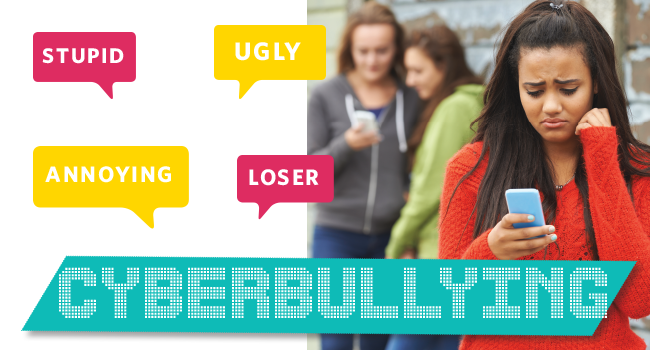
One in five children reports experiencing bullying. Here’s how to spot the hidden signs and stop it in its tracks, whether your child is the victim or the aggressor.
Bullying is an increasingly common problem in schools and has been shown to have serious, or at times, devastating short- and long-term impacts on children involved, including anxiety, depression or even thoughts of suicide, the National Center for Biotechnology Information says.
But when it comes to bullying, many children suffer in silence. According to Mental Health America, research has shown that only a small percentage of children who are being bullied actually report it, often out of fear that adults won’t help or even make the situation worse.
Bullying can be distressing for both you as a parent or caregiver and the child involved, but there are things you can do to intervene and help, whether they are the one being hurt or the one doing the hurting.
The Warning Signs
Not all children will explicitly use the word “bullying” to describe their situation, if they even choose to share it at all.
According to stopbullying.gov, additional warning signs to recognize that may indicate your child is being bullied include:
- Difficulty sleeping or nightmares
- Frequent headaches or stomach aches, or even faking illness
- Decrease in self-esteem or feelings of helplessness
- Avoidance of social situations or loss of friends
- Sudden changes in eating habits, such as binge eating or skipping meals
- Loss of interest in schoolwork, declining grades or not wanting to attend school
- Frequently “losing” possessions or coming home with destroyed clothing, books, etc.
- Self-destructive behaviors, such as thoughts of harming others or self-harming behaviors
Pediatric psychologist Melissa Anne Faith, Ph.D., of Johns Hopkins All Children’s Hospital, notes that chronic bullying typically has three components: a power difference between the child and aggressor, repeated bullying and a social structure that maintains the victim’s status.
If your child seems socially isolated, lonely or is avoiding the playground, it may be a sign to start digging deeper.
Difficult Truths: When Your Child Is the Bully
When your child is the aggressor, it can be a difficult conversation. However, putting a stop to bullying requires looking at both parties involved.
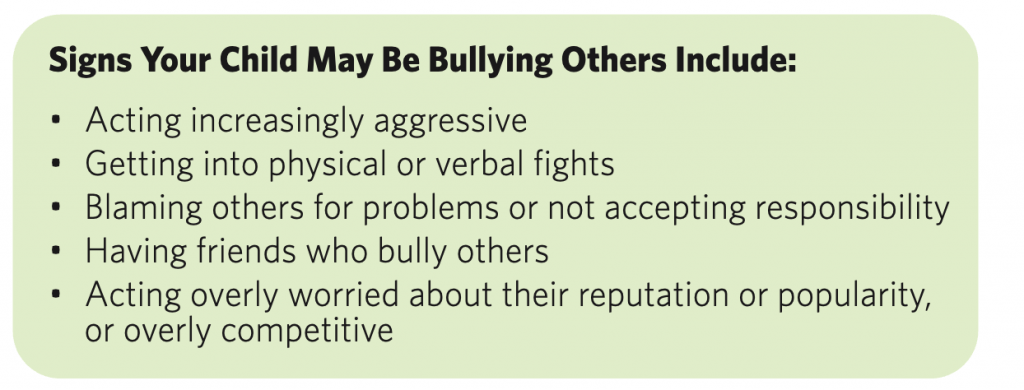
Experts at the Momentous Institute suggest that instead of labeling the child as “bad,” label the behavior. Ensuring that they understand that what they did is different from who they are as a person can help prevent a sense of injustice or frustration with the child.
Work with them to practice self-regulation and impulse control, and help them build self-awareness and empathy.
How to Support Your Child and Stop Bullying in Its Tracks
- Listen and keep a record: Listen to your child’s experience in a safe, judgment-free environment where they can tell their story. Remind them that part of your job as a parent or caregiver is to keep them safe. Start logging incidents they share with you.
- Coach the bystander: Over 70% of students and teachers have reported witnessing bullying in schools. Teach your child to overcome the bystander effect, even if it’s simply saying, “That’s not okay.”
- Foster friendships and involvement: Encourage your child to participate in activities that build their self-esteem and help them form friendships outside of school or wherever the bullying occurs.
- Inform yourself: Educate yourself about your school’s anti-bullying policies to understand how the school addresses the issue.
- Make contact with the school: Discuss the situation with your child’s teacher and/or principal. You can make a written request for an investigation and a plan of action. In Florida, schools are legally required to adopt an official policy to prevent bullying and work to protect students.