
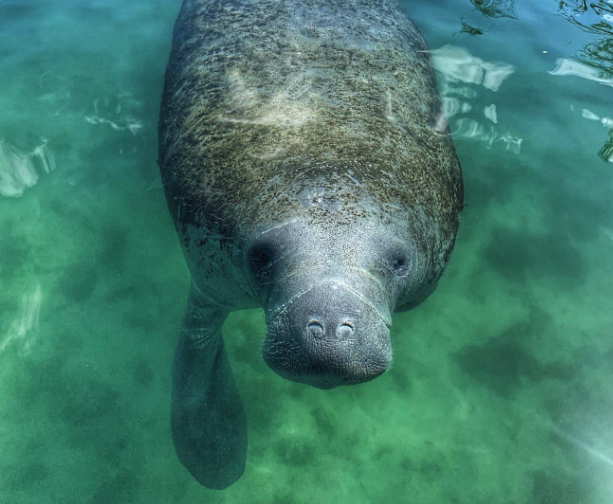
Manatee season in Florida officially starts Nov. 15, and Palm Beach County has one of the best places in the state to see them up close: Manatee Lagoon, an FPL eco-discovery center in Riviera Beach.
I spoke with Rachel Shanker, Manatee Lagoon’s conservation and education manager, about why manatees gather there, how to safely view them in the wild and what families can do this season.
Why Do Manatees Come to Manatee Lagoon?
Manatee Lagoon is next to Florida Power & Light’s (FPL) Riviera Beach Next Generation Clean Energy Center, Shanker said. The plant pulls water from the adjacent Lake Worth Lagoon to recondense steam during power generation. That process warms the water, which is then released back into the lagoon, sometimes almost 14 F warmer than the surrounding water, she said.
Manatees can’t survive in water below about 68 F, Shanker said. Once temperatures drop, they need to find warm water fast. That makes Manatee Lagoon’s outflow a magnet, drawing hundreds of manatees there each winter.
What to Expect During Manatee Season
According to Manatee Lagoon, manatee season officially runs from Nov. 15 to March 31 every year.
Manatees show up in the biggest numbers once cold fronts stick around and water temperatures consistently drop, according to Shanker. This could be November or December, she said, depending on the weather. The manatees will stay as long as it’s cold, then spread out again as temperatures rise.
During the off-season, manatees are still in the area but are not gathered in the same numbers, Shanker said. Visitors may also spot sea turtles, sharks and other marine life in the water behind the center during this time.
Rules for Viewing Manatees in the Wild
Manatees are a protected species under the Endangered Species Act and the Marine Mammal Protection Act, meaning it’s illegal to touch, harass, feed or give water to one. But Shanker said the same courtesy should extend to all wildlife, protected or not.
“We should leave all wildlife alone, give them their space, not feed them or give them water and just let our wildlife be wild,” she said.
Feeding manatees or giving them fresh water (even accidentally, like rinsing a boat with a hose) can teach them to approach docks and boats, Shanker said. That puts them in the path of the single biggest human-related threat they face.
The basics, according to Shanker:
- Stay at least 50 feet away and observe from a distance.
- Never touch, feed or give water to a manatee.
- If a manatee approaches you while you’re paddleboarding, kayaking or swimming, keep your hands to yourself and let it move on its own.
- Manatees are large and strong. As Shanker put it, “Even though they’re not aggressive, if it gets spooked, they’re very big and very strong,” and an accident could hurt the manatee or a person nearby.
The Biggest Threats Manatees Face
Boats are the leading human-related cause of death for manatees of any age, Shanker said. To help, she recommends:
- Slowing down in manatee zones.
- Wearing polarized sunglasses to spot manatees through glare.
- Following posted speed limits and no-wake zones, especially during manatee season.
Cold weather is the biggest natural threat, according to Shanker. Manatees can’t survive water below about 68 F, so they have to find warm water pockets around the state each winter.
Manatees can also get entangled in debris or get sick from eating trash in the water, she said.
How to Help Manatee Conservation Efforts
Shanker’s suggestions:
- Make sure trash ends up in a trash can.
- Reduce, reuse, recycle and refuse single-use items.
- Join a beach or waterway cleanup.
- Learn about manatees and share what you learn. “One of my favorite ways that everyone can help manatees, no matter where you are,” Shanker said.
Areas to Avoid During Manatee Season
Manatee sanctuaries and protection zones go up around the state during manatee season, marked with buoys reading “no motorized vessels,” Shanker said. Manatee Lagoon itself gets these buoys once the season starts.
Shanker advises avoiding water sports, swimming or any interaction in areas where manatees are known to gather for warm water. Scaring them out of those spots can push them back into cold water and put them at risk of getting sick, she said.
Signs a Manatee May Be in Distress
According to Shanker, watch out for:
- An open wound that looks fresh or is actively bleeding (healed injuries typically show up as light gray or white scarring, which is normal for manatees that have survived a boat strike).
- Floating consistently on one side, known as listing, rather than floating evenly with its back up and belly down.
- Its tail riding higher than its head consistently while it’s in the water.
- Breathing more often than once a minute (manatees normally surface every two to five minutes while moving, and can hold their breath up to 20 minutes while resting).
If a manatee is floating calmly and not moving for 10 to 15 minutes, she said, it’s likely just resting. If you see a manatee showing signs of distress, call the Florida Fish and Wildlife Commission (FWC).
Keep your distance and don’t try to help the manatee yourself; leave that to trained responders. Taking photos and video and noting how often the manatee is breathing can help wildlife experts assess the situation when they arrive, Shanker said.
The next time you encounter a manatee in the wild or find yourself curious to see them up-close, just remember to keep your hands to yourself and learn with your eyes. Keep a respectful distance, skip the touching and feeding, and let these sea puppies do what they came to the springs to do: stay warm.
Upcoming Manatee Lagoon Events and Viewing Opportunities
- Manatee season kickoff: Saturday, Nov. 21, 2026, with food trucks, games and activities for all ages.
- Manatee Fest: Saturday, Feb. 6, 2027, the center’s anniversary celebration, with the main parking lot closed for exhibitors, vendors, food trucks, games and activities.
- Public tours: Manatee Lagoon offers free public tours daily at 2 p.m., including a look at manatee bones and a real manatee tracking tag.
Can’t make it in person? Manatee Lagoon streams two live cameras on manateelagoon.com, Shanker said. One above-water feed shows the outflow area, and one underwater camera shows manatees and other marine life along the seawall.
Admission, parking and educational activities at Manatee Lagoon are all free to the public.