
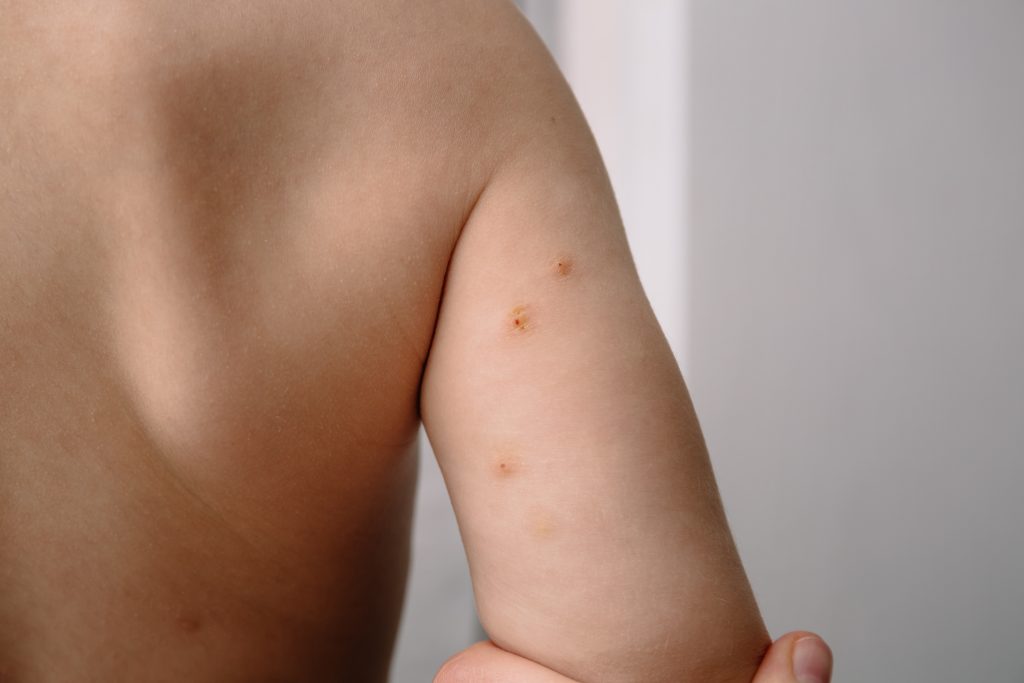
As we enter the winter season of sharing jackets and cuddling together under movie night blankets, skin infections can quickly spread among your little ones, possibly more easily than you might have expected.
Molluscum contagiosum is one to watch out for, as it is a highly contagious skin infection that can be transmitted through skin-to-skin contact and primarily affects children. Cases of the viral infection were also reported to be increasing in prevalence, according to a 2023 study published in the Journal of Clinical and Aesthetic Dermatology.
Knowing what to look out for and understanding the proper precautions can prevent you and your children from taking multiple trips to the dermatology office this holiday season.
What is Molluscum and How Can It Spread?
Molluscum contagiosum, commonly known as molluscum, is a viral skin infection that leads to small pink, white or skin-colored pimple-like bumps, lesions or warts on the skin. The bumps, which can accumulate in clusters when spread and are usually painless, can excrete fluid or become sore, swollen or itchy if irritated, according to the Cleveland Clinic.
The infection is most common in children ages 1 to 12, as reported in an article from The Royal Children’s Hospital Melbourne, primarily due to their higher likelihood of touching objects and interacting with peers more frequently.
Adults can also contract molluscum, though it is less common because they often have developed some form of immunity prior to exposure, according to Dr. Michael Lavery, Dr. Anita Arthur, Dr. Jacob Nosewicz and Dr. Akshitha Thatiparthi from the UF Department of Dermatology.
Direct skin-to-skin contact, including casual contact between children during play, can spread the virus, according to the UF Dermatology doctors. Personal items and objects, such as towels, washcloths, clothing, toys, razors, shared sports gear and gym mats, that an infected individual has contaminated can also lead to infection if shared. The UF Dermatology doctors described how the virus can also be passed to other parts of the body by scratching the lesions and can be spread in adults through sexual contact.
The molluscum lesions do not need to be open in order for the virus to spread, the doctors said.
“Molluscum can spread even when lesions are intact because viral particles are present within the central core of lesions, and any contact that disrupts a lesion can lead to release of viral material,” they wrote.
How is Molluscum Treated?
Molluscum typically resolves on its own within one to two years, although it often clears sooner, according to the UF Dermatology doctors. Treatment is not mandatory and will not affect a child’s long-term health if left untreated, they said.
A pediatrician or dermatologist can diagnose the infection, often based on its appearance. A dermatologist may scrape part of the infected skin off and examine it under a microscope, as noted in an article from the American Academy of Dermatology.
To prevent discomfort from the virus, speed recovery or stop transmission to various parts of the body or to others, a dermatologist may recommend a particular form of treatment to remove the infection.
According to AAD, the primary purpose of treatment is to remove the molluscum bumps without causing damage to the skin. This is often done through Cantharidin, an extract from the blister beetle, which can be used on children 2 years of age or older. The juice is placed on the bumps, forming a water blister on each bump within 24 to 48 hours. The bumps and blisters will then heal and disappear, usually in about two weeks, as reported in the article.
The blisters may cause pain, according to a Cantharidin treatment sheet from the Siperstein Dermatology Group; however, it is expected to subside over the next one to two days.
An infected individual may require repeated treatments, as new bumps can appear while others are healing, according to an article from Healthline.
How Can Transmission or Infection Be Prevented?
When changing your children’s diapers or clothing, remain vigilant for any changes to the skin, including pimple-like bumps. For parents with older children, alert them to notify you of any unusual bumps or lumps they may notice.
According to the UF Dermatology doctors, preventative measures to reduce the risk of transmission or exposure include:
• Avoid sharing towels, washcloths, clothing and other personal items
• If infected, cover the lesions with band-aids or clothing when possible, especially during close-contact play or sports
• Consistently wash hands and keep nails trimmed to reduce scratching
• Avoid shared baths with siblings
Though it might be slightly more time consuming, packing extra clothing, jackets, blankets or towels for your child before they arrive at school, attend sports practice or sleep over at a friend’s house could make all the difference in you and your family’s health.